Storytelling Into 2026
Oh hello,
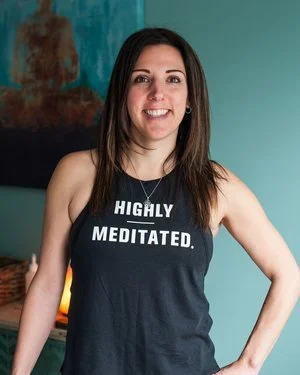
Happy New Year. I sure hope that this finds you well. If you’ve been with me for a while, you know how much I love writing the New Year’s newsletter. This introspective turn of the calendar offers a chance to reflect on what I’ve heard from you throughout the year—both in words and through bodies—and to feel connected. I hope you feel this, too. This year, I’ve decided to open on a more personal level. It feels aligned with the theme I want to carry into 2026 and with my belief that relational connection must be deeply prioritized as we move forward. What better way to foster this aim than through storytelling? If you’re with me, and if you're up for a lengthier read, I’d like to take you back a few years.
What do you remember about 2016? Maybe that Donald Trump won his first presidential election, or that you first heard the word “Brexit”, or that David Bowie and Prince both died? In hindsight, a pre-COVID year almost feels quaint, doesn’t it? For me, 2016 was the hardest year of my life, a jagged keloid scar across my timeline. In February that year, I initiated a marital divorce that was met with an excruciating and active resistance. There was a rapid cascade of effects: I lost my house, my car, and a number of core relationships. I had to relocate and rebrand my business and navigate a new way of life for myself and my children while locked in a state of fight-or-flight. Amid all of this, I also somehow found some space to examine an unclaimed part of myself and publicly came out as a gay woman. By the time the holidays rolled around, I was a shell of myself, barely sleeping or eating, and the absolute last thing I wanted to do was socialize, plan, and celebrate. I tried my best (which was not much better than my worst) to rally for my children but I was burnt out, untethered, and nothing seemed to make sense. More than anything, my heart was broken—I feared, beyond repair—and I was genuinely concerned that I had been damned to lifelong emotional numbness with interludes of gutting pain. I don’t remember much about Brexit or where I was when Bowie died, but I vividly recall standing in the middle of Costco with my mother, watching everyone around me consume in the name of the Holiday Spirit, and I could not comprehend how people were just moving along as if everything was ok. I was in my Dark Night—a period in which everything I believed to be true and certain had been annihilated—and I had never felt so alone.
If you were with me in 2016, you undoubtedly saw traces of this upset, although I like to tell myself that I hid it quite well. What you could not have known was that I was not in my body. In fact, I was doing everything I possibly could to stay outside of myself and to avoid feeling my reality. I poured myself into my job through (perhaps ironically) building a studio for yoga and bodywork, I surrounded myself with a core group of friends in an attempt to never be alone, and when I was, I would self-soothe with heavy doses of gin just to get through to the next day. On Christmas Eve that year, my family tried to make things normal while I retreated repeatedly to the kitchen to cry in secret, quietly begging the night to be over.
On Boxing Day, while my children were with their other parent, I took myself to the movies at the old Oxford Theatre. I sat in the historic balcony, surrounded by a full house of families and couples and, while watching one of the most depressing movies I’ve seen to date, I felt a surge of victory and liberation for having made it through the demands of the season. I felt free and strong knowing that I would never have to face that Christmas again. The tide was shifting and I sensed that a return to Self had begun.
I’ve been thinking of Christmas 2016 a lot these past weeks. For me, 2025 was a banner year. I graduated with my bachelor’s degree in psychology—a goal I once thought I would never be able to accomplish—and I completed an award-winning thesis that is now contracted to be extended into a book. I took a memory lane trip with my mother back to the city where I spent my first five years; the only place I ever lived with my father before he died. Then, on a spring vacation to Iceland, I proposed to my partner, and we got married in a small ceremony in Wolfville this past summer. I marked 20 years in practice as a massage therapist, spent exceptional time with my family, and found deep gratitude in watching my children thrive through their respective paths into adulthood. The contentment I have felt this year is beyond any peace I have experienced thus far. It’s the sense of alignment that exists after completion—an embodiment that can only be savoured by resisting the urge to immediately move to the next item on the infinite to-do list of life. It makes sense, then that I was very much looking forward to the holidays. Even so, the subtle excitement and joy I felt while planning and participating was tempered by my knowing that some folks out there, maybe even you, were having my Christmas 2016.
Since that year, Christmas has been forever changed. Many gifts have been reallocated to donations, parties have shifted to small family gatherings, and late nights of food and drink have moved to quiet mornings of reading beside the Christmas tree. In almost every way, I couldn’t be farther from that pivotal year, yet here it is with me, not as a weight or a trauma but as an awareness that broadens the landscape of my presence. I have enough space, after nearly ten years, to hold both truths: that life is painful and beautiful, that there is suffering and joy and everything in between. By not forgetting my most painful year, I have a path to radical empathy; a way to see people who are navigating challenge and a reminder to remain humble and gracious in my current circumstance. To reject this would be to live only a partial life without honouring all parts of the experience that allow one to connect wholly.
Why am I sharing this? Because I think it speaks to our current dilemma: how do we fully appreciate health and joy in our very brief lives amidst a surge of such overwhelming pain in the world? Our community members are struggling through unprecedented levels of food and housing insecurity, our trans and nonbinary friends are enduring relentless messages of hate and exclusion, our planet is under the strain of human-induced harm, governments around the world have gone rogue while famine and war are eclipsed by the noise and desperate demands of late-stage capitalism, and social media continues to widen the cavernous divide between left and right while the 1% sneak by untouched, top-heavying the imbalance of our societal structure.
In 2025 we’ve been navigating a figurative divorce; a separation from a toxic and unhealthy relationship with the way things have been. This change is being received with violent resistance from systems and individuals who want to maintain the old ways. Of course, people have been burnt out, fatigued, irritated, confused. Even without paying attention to the news, we are impacted by the stress of those around us because our energy is not a closed circuit. We unavoidably absorb the messaging of our current state and the unrelenting demands for attention can leave us standing in the middle of a metaphorical Costco wondering how the heck anyone is still shopping like nothing’s wrong.
But the world isn’t just a hate fuelled dumpster fire. It’s also flourishing with quiet beauty. I know this because a woman smiled at me on my dog walk this morning, and I saw a man pick up a stranger’s garbage can that had blown into the road, and a client sent me a Christmas card in the mail, and a friend loaned me a book that she thought I’d love, and the wind was at our backs at Conrad Beach on Sunday, and the sunrise before Monday’s rainstorm was so brilliantly red that it gave all the houses in our neighbourhood a rose glow. Life is beautiful. And life is hard. And life can plateau on the in-between. How do we hold these truths together when it’s so tempting to cling to either polarity—to focus only on the bad or absently overindulge in the good? Both ways are keeping us outside of ourselves. How do we acknowledge that our systems are failing and at the same time, as humans, to honour a birthright to experience safety, and make connection, and feel joy, and experience love? We can’t just know this; we must feel it. When we can embody our experiences, our capacity expands. We can attend to the injustices and hurts while also making space to appreciate our own privileges and share in our joys. We can do this by taking care of ourselves through being honest about our needs and extending our intention to those we love thereby nourishing our connections.
Change is happening, whether on a macro level or within our individual selves, and we won’t be the same in a year’s time. I invite you to take stock of what is most important to you and to celebrate it in a way that lets your heart feel expansive or your feet to feel grounded or your belly to feel spacious or your back to feel strong or your head to feel inspired. What you see when you look back on change is that it wasn’t the grand events that caused the shift. Growth is cultivated in small moments, awakening conversations, little decisions to take a new route. It only makes sense in retrospect.
There is so much that is beyond our control right now so, as we move forward into 2026, don’t forget that your life is being sculpted in the everyday happenings, the chance encounters, the little opportunities that are abundantly available if we’re moving slowly and intentionally enough to see them. Life is so short. You can find joy and meaning while still caring for the world. Stay present, stay connected, and know that we're on this ride together. Thank you for travelling with me this year.
Onward,
Alicia
If you are experiencing mental health struggles that require immediate care, please check out these free services or call the provincial Mental Health and Addictions Crisis Line at 1-888-429-8167.